
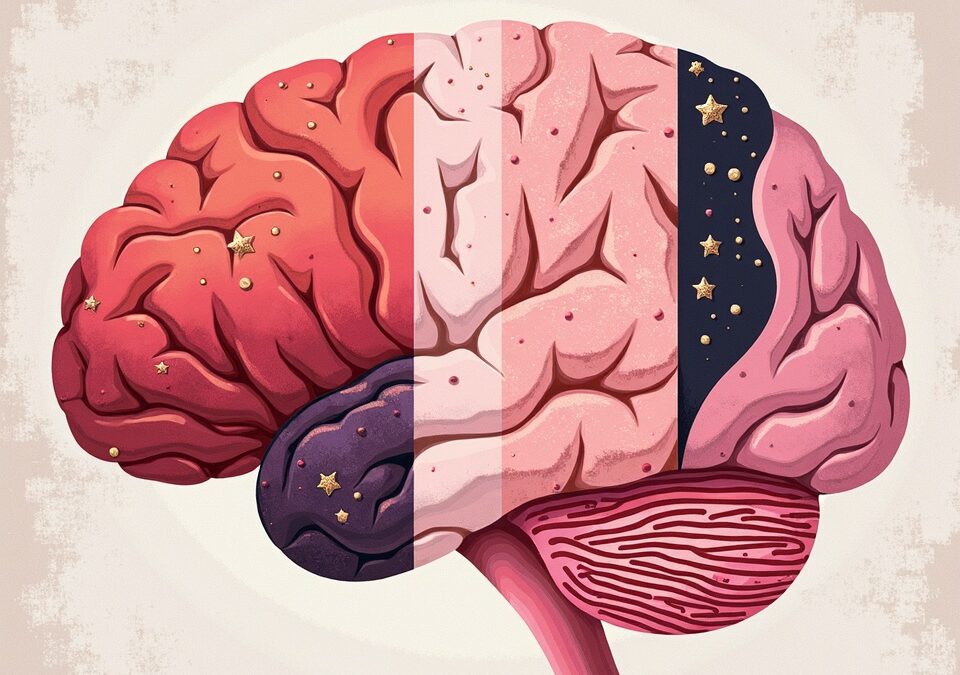
Research indicates that cognitive impairment is a common complaint during the menopausal transition, with multiple studies linking menopausal symptoms to later-life cognitive decline and increased risk of dementia (Greendale et al., 2010; Hogervorst, 2022; Ismail et al., 2025).
Key findings from recent research include:
- Prevalence and nature of cognitive complaints: Subjective cognitive decline affects between 44% and 62% of women undergoing menopause, mainly involving memory problems and executive function deficits during perimenopause compared to pre- and postmenopausal stages (Maki & Weber, 2018; Epperson et al., 2013; Dumas et al., 2010).
- Menopausal symptom burden and cognition: The greater the number of menopausal symptoms a woman experiences, the higher the likelihood of poorer cognitive function and neuropsychiatric symptoms in mid-to-late life, suggesting these symptoms may predict vulnerability to dementia (Ismail et al., 2025; Corbett et al., 2025; Zahinoor et al., 2025).
- Earlier menopause and brain structure: Earlier onset of menopause associates with reduced cognitive performance and lower grey matter volume in the brain later in life. Grey matter reduction may partly explain cognitive decline in women with earlier menopause (Guo et al., 2025; Edwards, 2018).
- Cognitive domains affected: Cognitive changes occur rapidly during perimenopause, with deficits observed in language, visuospatial ability, attention, memory, processing speed, and psychomotor speed (Meyer et al., 2003; Greendale et al., 2009; Fuh et al., 2006; Hogervorst, 2022; Kilpi et al., 2020).
- Potential role of hormone therapy: While hormone replacement therapy (HRT) might help mitigate some menopausal behavioral symptoms, its effects on cognitive function remain unclear and require further study. Some analyses suggest time-dependent and formulation-dependent effects of MHT on cognition, with benefits limited to specific situations and risks associated with other regimens (Hogervorst, 2022; Frontiers in Endocrinology, 2024).
In summary, menopause—and particularly the burden of menopausal symptoms and earlier menopause onset—is increasingly recognized as a critical period influencing cognitive aging and dementia risk in women. Ongoing research emphasizes the need to understand mechanisms and test interventions to mitigate these risks (Corbett et al., 2025; Ismail et al., 2025).
References
Andy, C. (2024). Systematic review and meta-analysis of the effects of menopause hormone therapy on cognition, Frontiers in Endocrinology 15, 1350318.
Corbett, A., et al. (2025). More menopausal symptoms linked to poorer brain function in later life. University of Exeter News.
Edwards, H. (2018). The many menopauses: searching the cognitive research literature for menopause subtypes. Maturitas, 120, 12-18.
Epperson, C. N., et al. (2013). Cognitive function across the menopausal transition in healthy women: Study of Women’s Health Across the Nation (SWAN). Menopause, 20(5), 514–520.
Fuh, J. L., Wang, S. J., Lee, S. J., Lu, S. R., & Juang, K. D. (2006). A longitudinal study of cognition change during early menopausal transition in a rural community. Maturitas, 53(2), 181–188.
Greendale, G. A., et al. (2010). Menopause-associated symptoms and cognitive performance: Results from the Study of Women’s Health Across the Nation. American Journal of Epidemiology, 171(11), 1214–1224.
Guo, M., et al. (2025). Age at menopause and cognitive function and decline among middle-aged and older women in the China Health and Retirement Longitudinal Study, 2011-2018. Alzheimer’s & Dementia, 21(2)14580.
Hogervorst, E. (2022). Cognition and mental health in menopause: A review. Maturitas, 154, 49–59.
Ismail, Z., et al. (2025). Menopausal symptom burden as a predictor of mid- to late-life cognitive and behavioral vulnerability: Findings from the CAN-PROTECT cohort. PLOS ONE, 20(3): e0301165.
Kilpi, F., et al. (2020). Age at menopause and cognitive function in a population-based sample of older women: Findings from the UK Biobank. Neurology, 95(17), e2465-e2473.
Maki, P. M., & Weber, M. T. (2018). Cognition and the menopause transition. Menopause, 25(9), 1024–1036.
Meyer, P. M., et al. (2003). Cognitive functioning and menopause: The Study of Women’s Health Across the Nation (SWAN) Menopause, 10(5), 408–414.
Zahinoor, I., et al. (2025). Menopausal symptom burden as a predictor of cognitive decline and neuropsychiatric vulnerability: CAN-PROTECT cohort study. PLOS ONE.